Quick answer
Before drying equipment is removed, request the moisture-monitoring records, the contractor’s reason for ending drying, and a written list of unresolved conditions. Before insulation or drywall conceals the work, also request the applicable permit and inspection records, cleanup summary, and any project-specific professional assessments.
Treat these as separate decisions. A drying record is not a building inspection, and no generic document package establishes that every property is safe to occupy. EPA advises consulting a qualified restoration or remediation professional when needed to determine whether flood cleanup is complete. (epa.gov)
This guide is for U.S. homeowners organizing the handoff from water, fire or storm cleanup to reconstruction. The checklist below is a suggested records request—not a claim that every contractor must provide every item on every project.
1. Separate equipment removal, wall closure and reoccupation
Ask your project contact to document three decisions separately:
| Decision | Question to put in writing |
|---|---|
| Remove drying equipment | What findings support ending drying in each affected area? |
| Conceal the work | What cleanup, repairs and required inspections must be completed before insulation or drywall goes in? |
| Reoccupy the property | What restrictions, professional evaluations or official approvals still apply? |
Avoid accepting one broad statement—such as “mitigation complete”—as the answer to all three.
EPA’s flooded-home guidance describes completion in terms of removing materials that cannot be cleaned and dried, replacing essential equipment, drying the home and cleaning remaining surfaces. That is broader than simply collecting the fans and dehumidifiers. (epa.gov)
Practical check: Ask for a room-by-room status summary. Use specific labels such as “drying finished,” “cleanup outstanding,” “inspection pending” or “excluded from this contract.” Ask who is responsible for the next decision in each area.
2. Request moisture records that explain the drying decision
Ask for the monitoring records and an explanation of what they mean. A screenshot with an unexplained number is not a useful handoff.
For areas being retained and rebuilt, request:
- A room sketch or photographs identifying measurement locations.
- The material measured at each location.
- Dated initial, follow-up and final readings, where taken.
- Meter identification, material setting and measurement scale.
- Any unaffected comparison locations used.
- The drying target and the basis for choosing it.
- Areas that were inaccessible or not measured.
- The contractor’s written conclusion about ending drying.
Moisture-measuring devices use material-specific settings, and materials may not look visibly wet even when excess moisture remains. Massachusetts public-health guidance also recommends retesting moisture after drying. Appearance alone is therefore a poor substitute for explained measurements. (mass.gov)
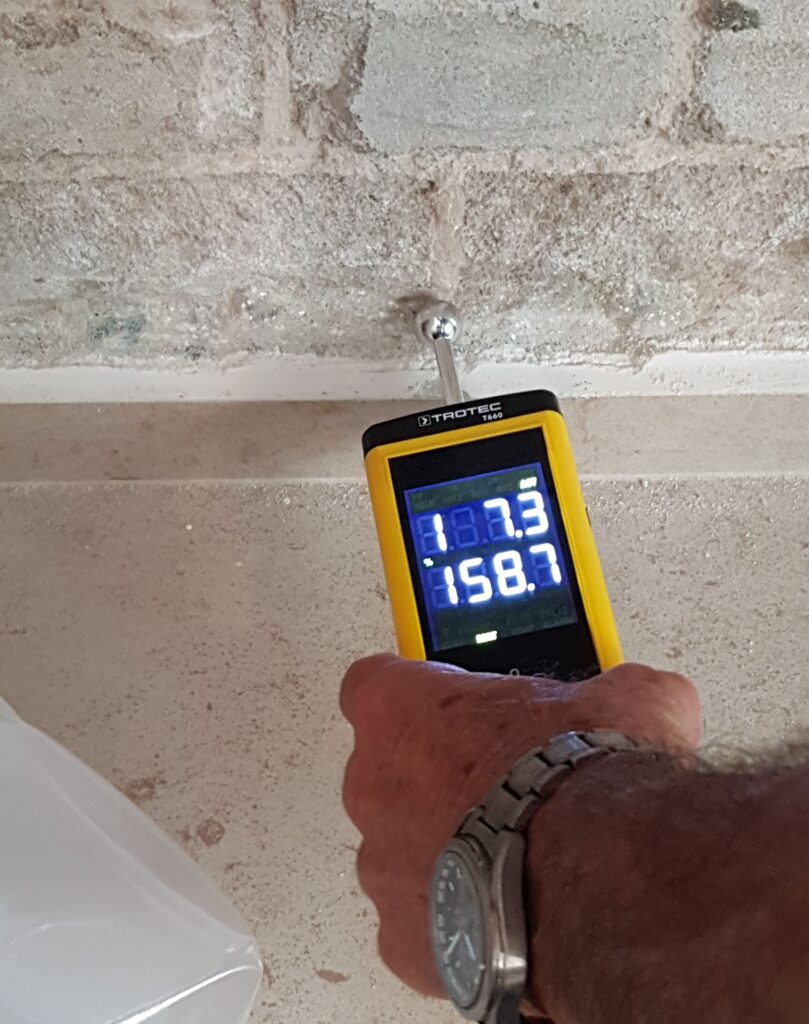
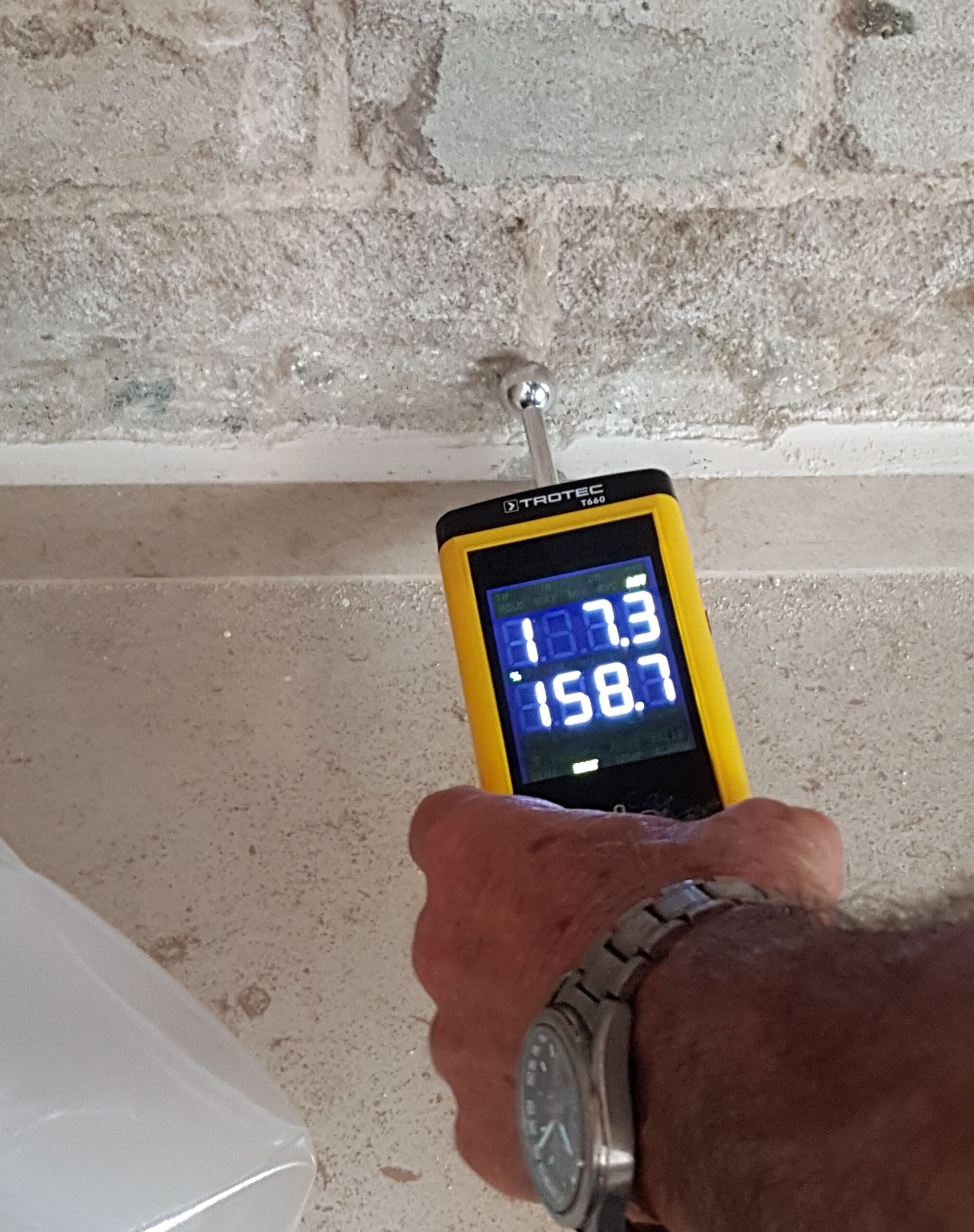
Common mistake: Treating every displayed number as a moisture-content percentage. Ask whether the instrument reported a percentage or a relative scale, and how the professional interpreted it for that material. Do not apply an internet cutoff without that context. (mass.gov)
For cost review, request an equipment record alongside the moisture log: equipment type, quantity, location, installation date, changes and collection date. Ask the contractor to reconcile those entries with billed quantities and rental periods. This is a billing check, not a homeowner instruction to switch equipment off.

3. Get a cleanup summary—not just a demolition invoice
Request a concise account of what was removed, what was retained and what cleanup was performed.
A useful summary should identify:
- Rooms and building components included in the work.
- Materials removed and disposal work completed.
- Materials retained and the treatment or cleaning performed.
- Changes from the original scope.
- Areas excluded or left inaccessible.
- Dated photographs before work, during exposure and at handoff.
For mold-related work, ask how the contractor evaluated completion. EPA’s remediation guidance emphasizes correcting the moisture problem and addressing visible mold, mold-damaged materials and moldy odors. Its detailed guide is written for schools and commercial buildings; it is useful background, not a house-specific clearance standard. (epa.gov)
For fire or smoke work, request separate entries for building surfaces, contents and any HVAC work included in the contract. If a specialist evaluated a component, request that report rather than allowing a general cleanup summary to stand in for it.
For flood-affected HVAC systems, EPA advises against using the system for drying until a professional says it is safe. Ask for the relevant professional’s findings and any remaining restrictions. (epa.gov)
4. Record unresolved conditions and who owns the next step
Create an open-items register before the cleanup contractor leaves. Suggested columns are:
| Location | Unresolved condition | Next action | Responsible party | Work awaiting resolution |
|---|---|---|---|---|
| Identify the room or component | State the issue without guessing its cause | Describe the requested assessment or repair | Name the assigned company or professional | Specify what should remain accessible |
Ask explicitly whether the original water-entry problem has been corrected or only temporarily controlled. EPA identifies fixing the water or moisture problem as a key part of remediation completion. (epa.gov)
Request the repair record from whoever addressed that source. Ask them to state what they repaired, what they checked and what remains uncertain.
Also list any unresolved questions about structural damage, electrical systems, gas systems, roof assemblies or hazardous materials. Request assessments from appropriately qualified professionals rather than asking the drying contractor to answer outside its scope.
Practical check: Replace vague entries such as “owner to handle” with a named next action. “Arrange an assessment of the inaccessible wall cavity before closure” is more useful than “check wall later.”
5. Verify permits and inspections before work is concealed
Ask your local building department which permits and inspections apply to the actual repair scope. Give them the property address and a description of the proposed work.
Request copies of applicable:
- Permit numbers and approved plans.
- Inspection results—not merely appointment confirmations.
- Correction notices and subsequent approvals.
- Approved revisions affecting the reconstruction.
- Special-inspection reports, where required.
- Final permit approvals when the project reaches completion.
Local example: Portland, Oregon. The city’s residential inspection guide says permitted work must be inspected before being covered. It also states that rough electrical, plumbing and mechanical inspections must be approved before the framing inspection. These are Portland requirements, not a nationwide sequence. (portland.gov)
Common mistake: Assuming that an issued permit means the work has passed inspection. In Portland, inspection reports record approval or required corrections, and permit closure requires the applicable final approval. (portland.gov)
Do not ask the reconstruction crew to conceal work while an inspection question remains unresolved. Ask the building department what must stay exposed and obtain the answer before scheduling closure.
6. Distinguish contractor records from independent assessments
A contractor’s work summary documents that contractor’s activities and conclusions. Ask separately whether anyone performed an independent assessment, what they evaluated and what they did not evaluate.
If project-specific verification was performed, request:
- The evaluator’s name, qualifications and relationship to the contractor.
- The purpose and scope of the assessment.
- Areas inspected and inaccessible areas.
- Methods, observations and results.
- Acceptance criteria and their basis.
- Limitations, unresolved findings and recommended follow-up.
Do not automatically order mold air testing because someone describes it as a universal completion requirement. EPA says sampling is not usually recommended for flooded homes; its professional remediation guidance also notes that no federal mold or mold-spore thresholds have been established. (epa.gov)
If sampling was performed, request the interpretation as well as the laboratory results. EPA cautions that air sampling represents conditions at the sampling moment and requires experienced interpretation. A laboratory sheet alone does not establish whole-property readiness. (epa.gov)
Ask: “What decision does this assessment support, and what remains outside its scope?”
7. Worked example: drying finishes, but reconstruction waits
Consider this hypothetical handoff, not a reported project:
A supply-line leak affected a kitchen wall. The mitigation contractor proposes collecting its equipment, while the rebuilding contractor plans to install insulation and drywall.
The homeowner requests the records above and receives:
| Record | What it shows | Next request |
|---|---|---|
| Moisture log and location sketch | Contractor reports its drying target met at listed points | Obtain its written basis for ending drying |
| Plumbing repair summary | Failed supply line replaced | Retain with the project file |
| Cleanup summary | Damaged wallboard removed; remaining cavity photographed | Confirm exclusions and outstanding cleanup |
| Electrical inspection status | Required rough inspection still pending | Keep affected work accessible |
| Reconstruction scope | Insulation and drywall proposed | Coordinate installation after applicable approvals |
The sensible response is not automatically to keep all drying equipment running. Ask the drying professional whether continued drying is needed and why.
The separate reconstruction question is whether the required inspection has passed. Where pre-cover approval applies, ending drying does not remove that requirement. Portland’s inspection sequence illustrates this distinction. (portland.gov)
For cost planning, ask each contractor to identify any additional work separately: its scope, price basis, authorization and responsibility. Do not treat a documentation gap as proof that an extra charge is necessary—or unnecessary.
8. Use this handoff checklist before authorizing the next phase
Send this request to the project coordinator and copy the reconstruction contractor:
Please provide the following applicable records before equipment collection or concealment of affected work. Mark items “not applicable” or “not performed” rather than leaving them unexplained.
- Affected-area sketch and dated photographs.
- Moisture-monitoring records, measurement locations and scale explanations.
- Drying targets, final findings and equipment-removal rationale.
- Equipment installation, movement and collection record.
- Cleanup and material-removal summary, including exclusions.
- Water-source repair record and any temporary measures.
- Open-items register with responsible parties and next actions.
- Applicable permits, inspection results and correction approvals.
- Project-specific professional reports and limitations.
- Updated reconstruction scope and written change authorizations.
- Outstanding restrictions and follow-up arrangements.
Keep the original files and share the relevant records with the next contractor. Label photographs by room, wall and date.
If records are missing, ask what was not documented and what assessment could now resolve the uncertainty. Do not ask anyone to reconstruct readings they never took.
The final check is straightforward: Can each proposed next step be traced to an explained finding, an applicable approval or a clearly assigned unresolved item? Use that question to organize the handoff—not as a substitute for professional judgment or official occupancy requirements.