Quick answer: A floodwater or sewage cleanup proposal should explain the suspected contamination, affected rooms and materials, what will be removed versus cleaned, how unaffected areas will be protected, how waste will leave the property, and how drying and completion will be documented. Do not assume a clean-water drying plan is suitable for contaminated water: EPA expressly limits its clean-water cleanup table to clean-water damage, while CDC recommends discarding drywall and insulation contaminated by sewage or floodwater. (epa.gov)
This guide is for U.S. homeowners comparing professional cleanup proposals. It is a scope-review checklist—not instructions for entering a damaged building or performing contaminated-water cleanup. EPA advises waiting to reenter a flooded home until professionals say it is safe. (epa.gov)
1. Establish what the contractor knows—and what remains unverified
Start with the proposal’s description of the event. “Water damage” alone does not tell you what the contractor has allowed for.
Floodwater may carry sewage or chemicals into a home. EPA’s clean-water guidance therefore should not be applied automatically to outdoor flooding or a sewage backup. (epa.gov)
Ask the contractor to record:
- Reported source: such as a supply-pipe leak, sewer backup or water entering from outdoors.
- Inspection findings: affected rooms, materials and accessible spaces.
- Timing: when water entered, when it was discovered and any uncertainty about how long materials stayed wet.
- Access limitations: areas behind cabinets, beneath flooring or inside wall assemblies that were not inspected.
- Outstanding decisions: what needs further investigation, specialist assessment or opening of an assembly.
Request a clear distinction between observed, reported and not yet verified. For example, “homeowner reports water entered through the exterior doorway” is more precise than presenting an unconfirmed source as established fact.
EPA’s remediation-planning guidance recognizes that hidden damage can require a revised plan. It was written for schools and commercial buildings, so use its planning principles—not its area-based guidance as an automatic residential specification. (epa.gov)
Practical check: Ask, “Which parts of this price could change after access is gained, and what evidence will you provide before requesting additional work?”
2. Require material-by-material removal and cleaning decisions
A useful scope should identify the proposed treatment for each affected material, rather than promise to “sanitize the room.”
CDC recommends removing and discarding drywall and insulation contaminated with sewage or floodwater. It also advises discarding items that cannot be cleaned or dried promptly. FEMA’s homeowner flood guidance similarly distinguishes washable hard materials from porous materials and contaminated objects that cannot be thoroughly washed or laundered. (cdc.gov)
Ask for a room-by-room schedule with these fields:
| Scope item | What the proposal should explain |
|---|---|
| Material and location | Which wall finish, insulation, floor covering, cabinet component or other item is affected |
| Proposed action | Remove, clean, dry, refer to a specialist or assess further |
| Reason | Contamination, physical damage, inability to clean, access needs or another stated finding |
| Extent | The measured quantity and boundaries included in the price |
| Remaining uncertainty | What additional findings could change the decision |
Do not treat every wet material as equally salvageable. Equally, ask for an explanation before accepting a blanket instruction to remove everything.
For example, EPA’s clean-water table allows some wallboard to be dried in place when it has no obvious swelling and its seams remain intact. That table explicitly does not cover sewage- or otherwise contaminated-water situations. A contractor citing it should explain why its conditions apply to your loss. (epa.gov)
For items proposed for retention, request the cleaning approach, access needed to reach affected surfaces, and the basis for deciding that cleaning is feasible. “Apply antimicrobial” is not a complete explanation of which materials will remain or how contamination and residue will be addressed.
3. Ask how containment and building systems will be managed
Containment is about protecting areas beyond the work zone. EPA’s flooded-home guidance describes isolating unaffected areas and warns that contaminants in an HVAC system can spread into other parts of the home. Its mold-remediation guidance explains that containment selection requires professional judgment. (epa.gov)
Your proposal-review questions should include:
- Where does the work zone begin and end?
- How will workers and removed materials move through the property?
- Which unaffected rooms and belongings will be protected?
- What barriers or air-control measures are proposed, and why?
- How will vents and shared building systems be addressed?
- Who decides whether an affected HVAC system needs specialist assessment?
An equipment list is not a substitute for these answers. If the proposal includes filtered-air equipment, ask what it is intended to accomplish, where it will operate and how its use will be documented.
Do not assume ordinary fans are an appropriate first response. EPA’s clean-water table cautions against fan use before determining that water is clean or sanitary. (epa.gov)
Ask the contractor to explain any restrictions on access or use of the home during work. Do not interpret a proposed barrier or air cleaner as a declaration that the rest of the property is safe to occupy.
4. Clarify waste handling before demolition starts
“Debris removal included” leaves several important questions unanswered.
Ask the proposal to identify responsibility for:
- Packaging or otherwise controlling debris during removal.
- Protecting the route from the work area to the collection point.
- Providing containers, hauling and disposal.
- Cleaning the route and collection area afterward.
- Separating materials that require a different disposal arrangement.
- Documenting items removed from the home.
Local arrangements matter. EPA advises checking how the community is handling flood-damaged debris; where community collection is unavailable, a dumpster or contractor hauling may be necessary. Do not assume curbside collection is available or included in the contractor’s price. (epa.gov)
Also agree on damage documentation before disposal. NFIP guidance recommends photographs and videos before cleaning or discarding damaged items, including wide views, close-ups and appliance or electronics serial numbers. It also recommends retaining repair receipts. Documentation should be organized without entering unsafe areas or retaining items that present a health risk. (floodsmart.gov)
Practical check: Have the contractor distinguish demolition labor, containers, hauling and disposal charges. Then ask which are fixed, estimated or billed according to actual use.
5. Request drying records and a defined completion review
Cleaning and drying are related, but they answer different questions. A drying record should explain the moisture condition of retained materials—not merely confirm that equipment operated.
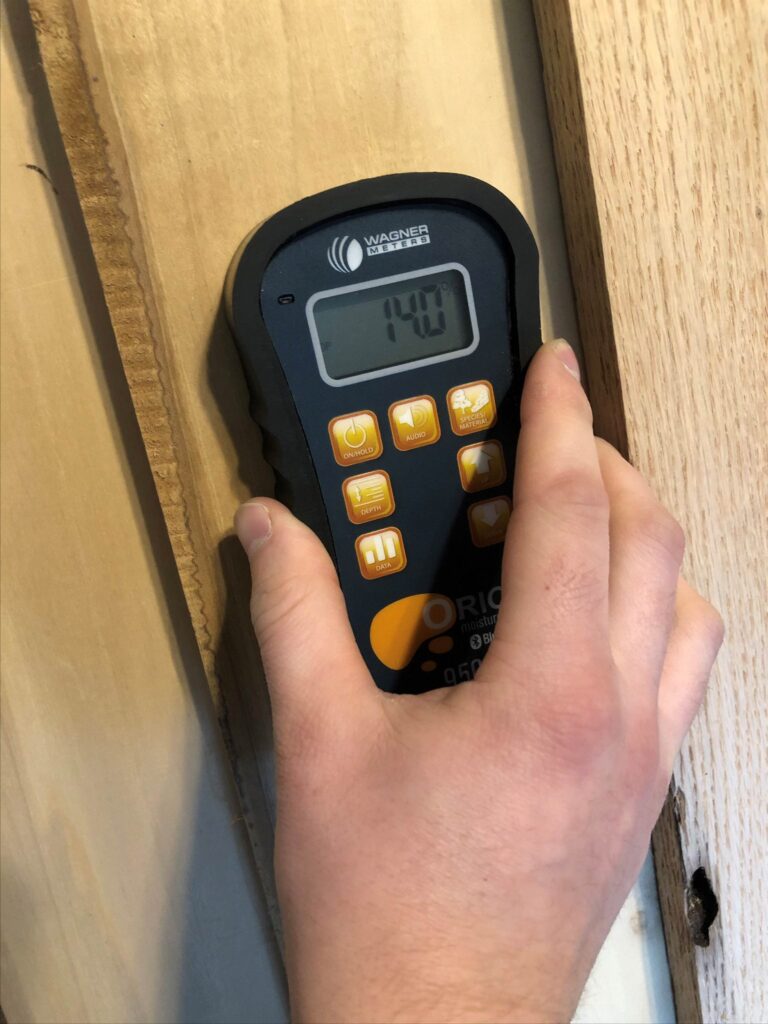
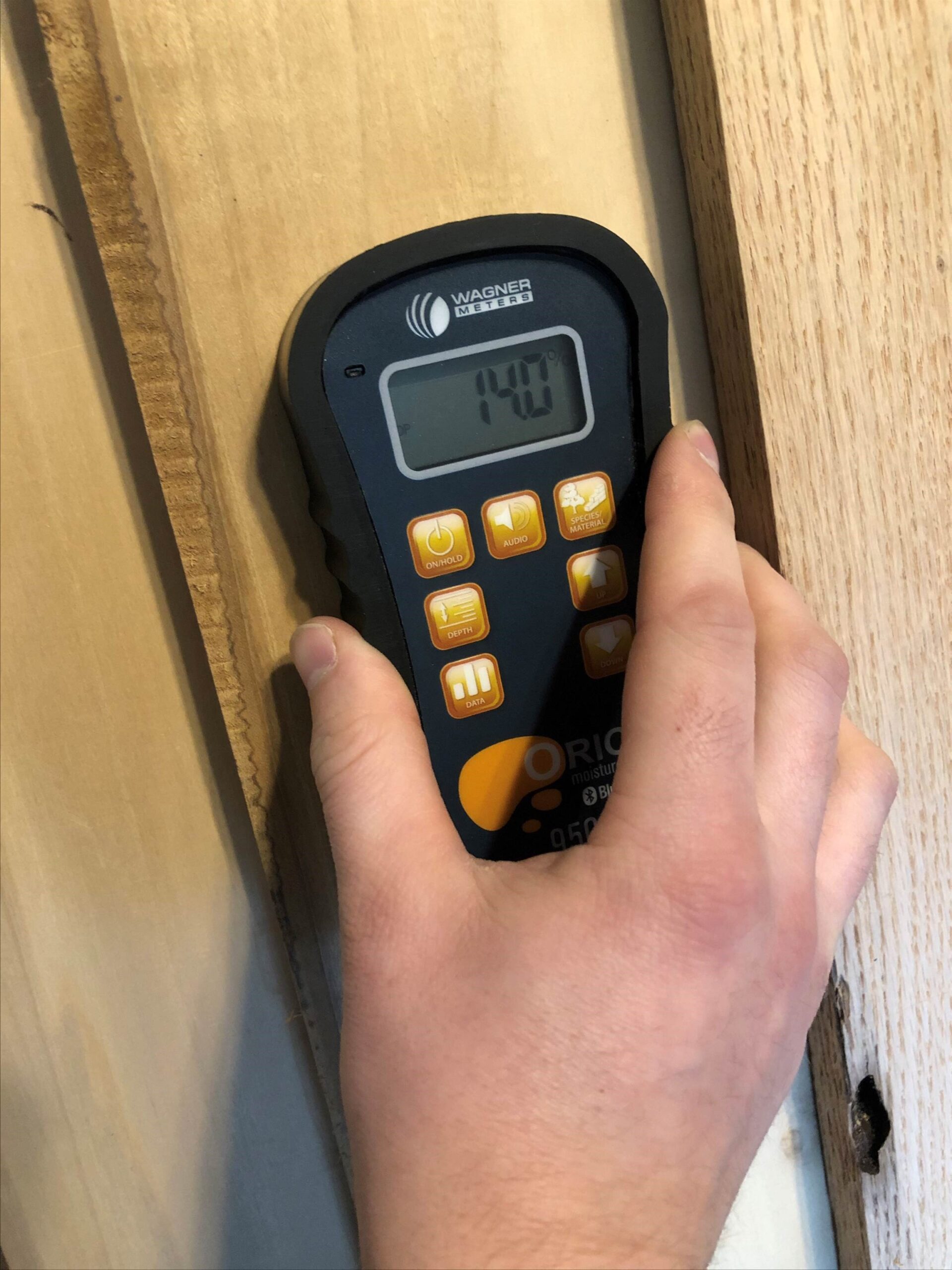
EPA describes moisture meters as tools for measuring building-material moisture and monitoring drying. It also says materials need to be completely dry before walls and flooring are refinished or replaced. (epa.gov)
For proposal comparison, request a drying-record package containing:
- A location plan identifying monitored materials and measurement points.
- Initial and follow-up readings, with dates.
- The instrument or measurement method used.
- The contractor’s material-specific drying targets and their basis.
- Equipment placement, operating dates and reasons for changes.
- Final readings and unresolved limitations.
These are useful records to request, not a claim that one federal form or universal moisture percentage applies to every project.
Ask who reviews the completed cleanup and what the review includes. Keep material drying, cleaning verification and permission to rebuild as separate questions in the paperwork.
Be cautious about a promise to “pass federal mold clearance.” EPA states that no federal limits have been established for mold or mold spores. It says sampling is often unnecessary when visible mold is present, although professionally designed sampling can have specific uses. If testing is proposed, ask what question it will answer, who will interpret it and what criteria will be used. (epa.gov)

6. Identify specialist work and exclusions before approving removal
A cleanup contractor’s proposal should not leave you guessing who handles hazards outside its agreed scope.
EPA warns that lead-based paint may be present in walls and that vinyl floor tile may contain asbestos. It specifically advises using an asbestos professional for removal of asbestos-containing materials. (epa.gov)
Ask the proposal to state:
- What happens if suspect materials are encountered.
- Who arranges assessment or testing where appropriate.
- Whether related specialist work is included, excluded or awaiting a separate quote.
- Who authorizes changes before affected materials are disturbed.
Likewise, ask who coordinates electrical, structural, plumbing and HVAC assessments when indicated. EPA’s flooded-home guidance identifies structural and electrical hazards and notes that cleaning and drying affected HVAC components can require professional help. (epa.gov)
Separate the cleanup endpoint from reconstruction. Request an explicit list of exclusions, such as source repairs, replacement finishes, cabinetry, contents storage or specialist services. These are questions to resolve—not assumptions that every job requires all of them.
7. Work through a clean-water versus floodwater comparison
Consider two hypothetical proposals for the same utility room. No prices or quantities are assumed.
- Scenario A: A recently discovered supply-pipe leak, professionally assessed as clean water.
- Scenario B: Outdoor floodwater entered the room, and the affected wall assembly includes drywall and insulation.
An initial comparison might look like this:
| Decision | Scenario A: assessed clean water | Scenario B: outdoor floodwater |
|---|---|---|
| Wallboard | Assess whether conditions support drying in place | Include removal of contaminated drywall |
| Insulation | Identify its type and treatment; do not assume it can remain | Include removal of contaminated insulation |
| Remaining materials | Explain cleaning, drying and access decisions | Explain removal or cleaning decisions based on contamination and condition |
| Documentation | Record affected locations and drying progress | Record affected locations, removal, cleaning and drying progress |
The wallboard distinction follows EPA’s limited clean-water guidance; the contaminated drywall and insulation distinction follows CDC’s disaster-cleanup advice. These examples are not complete specifications for either loss. (epa.gov)
Work through the comparison in three steps:
- Check the assumptions. If both bids describe the water simply as “clean,” ask how that conclusion was reached.
- Reconcile the scope. If one bid includes removal and disposal while another includes drying only, ask each contractor to explain the material decisions before comparing totals.
- Reconcile the endpoint. Confirm that both proposals identify what records you receive and what remains for another contractor.
The most useful proposal is not necessarily the longest or the least expensive. Look for one that lets you trace each major charge to a location, material, action and documented reason—and makes the unknowns visible before you commit.